Best Payment Gateway Options for Indian Ecommerce Businesses
A customer browsing your online store, adding products to their cart, and reaching the checkout page is about as close to a guaranteed sale as ecommerce gets.
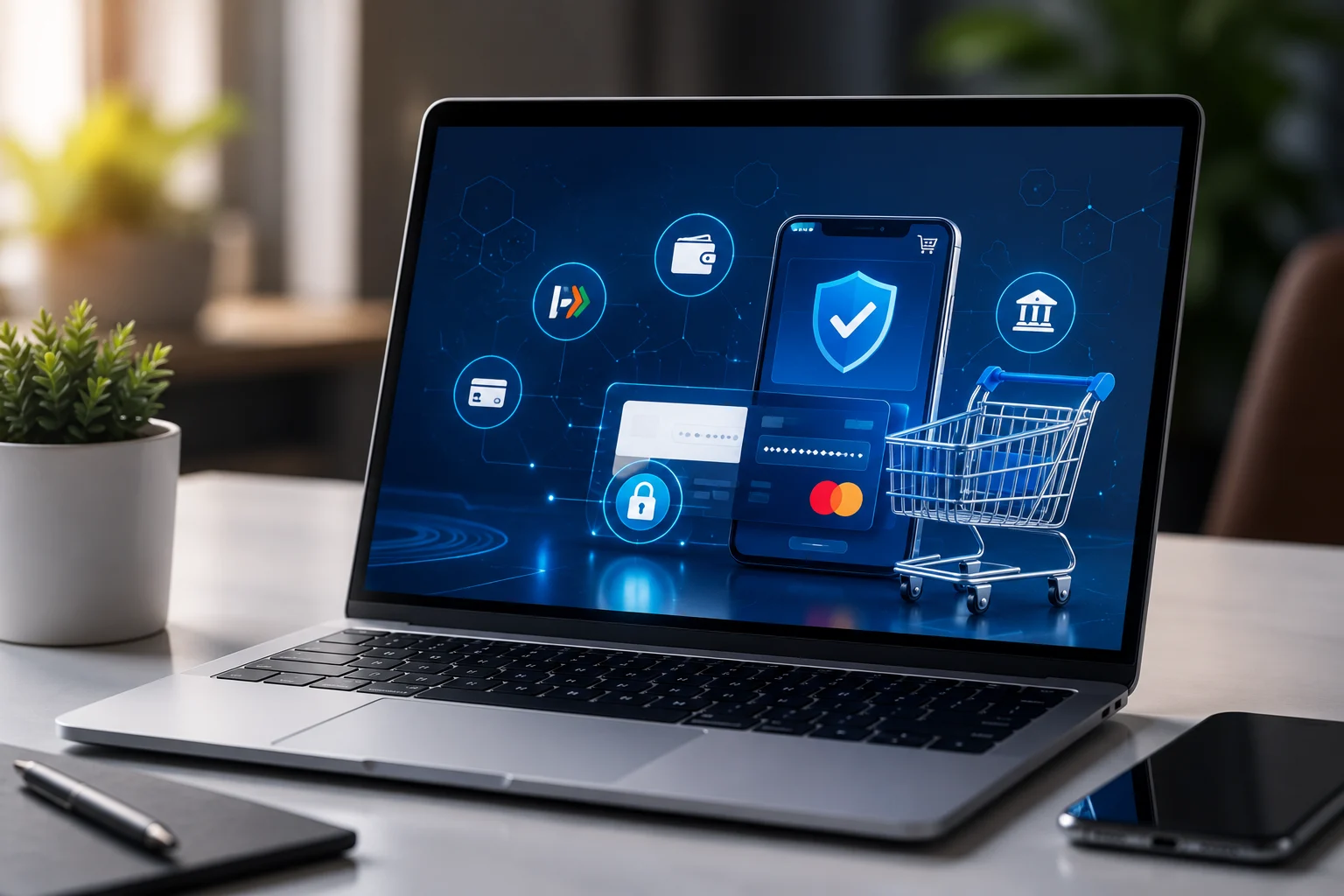
And yet, that is exactly the moment when a surprising number of Indian online stores lose customers — not because of pricing, not because of product quality, but because the payment step creates friction, uncertainty, or missing options that push buyers away at the last second.
Choosing the right payment gateway options for Indian ecommerce businesses is one of the most commercially consequential decisions you will make when building your online store. The wrong choice means lost sales, frustrated customers, and avoidable chargebacks. The right choice means a smooth checkout experience that converts browsers into buyers and keeps them coming back.
This guide covers everything Indian ecommerce businesses need to know about payment gateways — how they work, what to look for, the leading options in the Indian market, and how to choose the one that fits your specific business.
What Is a Payment Gateway and Why Does It Matter?
Before comparing options, it helps to understand exactly what a payment gateway does and why your choice of gateway directly affects your conversion rate.
The Role of a Payment Gateway
A payment gateway is the technology that securely connects your ecommerce store to the payment networks that process transactions. When a customer enters their card details, selects UPI, or chooses a wallet at your checkout, the payment gateway encrypts that information, sends it to the relevant bank or payment network for authorisation, receives the approval or decline response, and communicates the result back to your store — all in a few seconds.
From the customer's perspective, this happens invisibly. But the quality of this process — how fast it is, how many payment methods it supports, how reliably it works, and how trustworthy the checkout experience looks — directly affects whether the customer completes the purchase or abandons the cart.
Why Payment Method Coverage Is Critical in India
India's payment landscape is unusually diverse. Unlike many Western markets where card payments dominate, Indian consumers use a wide range of payment methods with strong preferences that vary by age group, income level, geography, and purchase type.
UPI has become the dominant payment method for millions of Indian online shoppers. Digital wallets — Paytm, PhonePe, Amazon Pay — remain popular for specific purchase categories. Net banking is preferred by many buyers for larger transactions. Credit and debit cards cover a broad segment. Cash on delivery, while declining, remains important for first-time online shoppers or purchases where buyers want to inspect before paying.
A payment gateway that does not support the method a customer prefers at checkout creates an immediate abandonment risk. Your customers should never reach your checkout page and find that their preferred way to pay is unavailable.
What to Look For in a Payment Gateway
Not all payment gateways are equal. These are the factors that matter most for Indian ecommerce businesses.
Payment Method Coverage
The gateway must support all the payment methods your customers use — UPI (including all major UPI apps), credit and debit cards across networks, major digital wallets, net banking for major Indian banks, and ideally EMI options for higher-value purchases.
Transaction Success Rate
Payment success rate — the percentage of attempted transactions that complete successfully — is one of the most important but least discussed metrics in ecommerce. A gateway with a high failure rate means customers who attempted to pay were declined or encountered errors, and many will not try again. Look for gateways with consistently high success rates, particularly for domestic Indian card transactions.
Checkout Experience Quality
Some gateways redirect customers to a separate payment page hosted by the gateway provider. Others allow a seamless checkout experience that stays on your website. The latter — called payment page customisation or embedded checkout — typically produces better conversion rates because customers feel more secure staying within your store's branded environment.
Transaction Fees and Pricing Structure
Payment gateways in India typically charge a percentage of each transaction value, sometimes with different rates for different payment methods. UPI transactions often have lower fees than card transactions. International card transactions typically cost more than domestic ones. Understanding the full fee structure for each gateway and applying it to your expected transaction mix gives you a realistic total cost comparison.
Settlement Timelines
When does the money reach your bank account after a transaction? Settlement timelines vary from same-day to T+2 (two days after transaction) to longer for some payment methods. Faster settlement improves cash flow, which matters particularly for growing businesses managing inventory investment.
Integration Quality
How well does the gateway integrate with your ecommerce platform and custom development? Well-documented APIs, reliable webhooks for payment notifications, and responsive developer support all affect how smoothly the payment experience works in practice and how much development effort the integration requires.
Customer Support
When a payment issue arises — a failed transaction a customer is asking about, a chargeback dispute, an integration problem — how quickly and helpfully does the gateway's support team respond? This matters more than it seems during evaluation.
Security and Compliance
PCI DSS compliance is the international standard for payment card data security. Every reputable payment gateway maintains PCI DSS compliance. Beyond this baseline, look for 3D Secure support for card transactions, strong fraud detection, and clear processes for managing disputed transactions and chargebacks.
Leading Payment Gateway Options for Indian Ecommerce
Razorpay
Razorpay is one of the most widely used payment gateways among Indian ecommerce businesses and startups. It offers comprehensive payment method coverage — UPI, cards, wallets, net banking, EMI options, and international cards — through a well-documented API that integrates easily with custom-built ecommerce platforms.
What Makes Razorpay Stand Out
The dashboard is genuinely excellent — giving merchants detailed visibility into transaction data, settlement timelines, and customer payment patterns. The payment links feature is useful for businesses that receive orders through channels other than the website. The Razorpay Smart Collect feature handles bulk payment collection efficiently for subscription or recurring payment models.
Developer documentation is thorough and maintained, which matters significantly when integrating with custom-built ecommerce software developed by a ecommerce development company.
Who It Suits
Razorpay suits most Indian ecommerce businesses from small to mid-market. Its combination of comprehensive payment coverage, strong developer tools, and reliable support makes it a solid default choice for businesses that do not have highly specific requirements that another gateway serves better.
PayU (formerly PayU India)
PayU is one of India's most established payment gateways with deep banking relationships that often translate into higher transaction success rates for card payments — particularly important for ecommerce businesses where even small success rate improvements have meaningful revenue impact.
What Makes PayU Stand Out
PayU's banking connections across Indian public and private sector banks often produce better authorisation rates for domestic card transactions compared to newer entrants. The LazyPay buy-now-pay-later integration offers a consumer credit option that can increase average order values for eligible transactions.
PayU's settlement options include an accelerated settlement feature for businesses that need faster cash flow access.
Who It Suits
PayU suits mid-market and larger ecommerce businesses where transaction success rates for card payments are a primary concern, and businesses where the LazyPay credit option aligns with their customer demographic.
CCAvenue
CCAvenue is one of India's longest-established payment gateways with one of the broadest bank coverage lists for net banking. It processes transactions from over 200 payment options including a comprehensive range of Indian bank net banking portals.
What Makes CCAvenue Stand Out
Net banking coverage that extends to smaller regional Indian banks makes CCAvenue particularly valuable for ecommerce businesses serving customers who bank with institutions not covered by newer gateways. Multi-currency support is also a strength for businesses accepting international payments alongside Indian rupee transactions.
Who It Suits
CCAvenue suits ecommerce businesses with a broad customer base across different regions and income levels where net banking with a wide range of bank options matters, and businesses processing a meaningful volume of international transactions alongside domestic ones.
Cashfree Payments
Cashfree has positioned itself specifically around fast settlements and high UPI success rates — two priorities that align well with the growth of UPI-dominant shopping behaviour among Indian consumers.
What Makes Cashfree Stand Out
Instant settlement — the ability to access funds immediately after transaction rather than waiting for T+1 or T+2 settlement — is Cashfree's primary differentiator for cash-flow-sensitive businesses. UPI AutoPay for subscription businesses simplifies recurring payment collection in a market where most consumers do not have credit cards with auto-debit functionality.
Who It Suits
Cashfree suits ecommerce businesses where cash flow management is a priority, subscription or recurring payment models that rely on UPI AutoPay, and businesses where UPI success rates are particularly important for their customer base.
PhonePe Payment Gateway
PhonePe, built on its massive consumer wallet and UPI user base, offers a payment gateway specifically optimised for capturing customers who are active PhonePe users — a very large segment of the Indian mobile payments market.
What Makes PhonePe Stand Out
For businesses whose customers are predominantly existing PhonePe users, the familiar checkout experience and pre-existing trust relationship can improve conversion rates. The gateway benefits from PhonePe's strong UPI infrastructure and high-volume processing experience.
Who It Suits
Businesses whose primary customer demographic aligns strongly with PhonePe's user base — typically younger, mobile-first consumers — benefit most from PhonePe's gateway. It is often used alongside a primary full-coverage gateway rather than as the sole payment option.
Instamojo
Instamojo targets small businesses, solopreneurs, and digital product sellers specifically — with a simpler setup process, lower technical integration requirements, and features like payment links and digital product delivery built in.
What Makes Instamojo Stand Out
The low barrier to entry — businesses can start accepting payments with minimal technical integration — makes Instamojo accessible for small ecommerce operations that are not yet ready for the more complex setup of enterprise-grade gateways. Payment links that can be shared via WhatsApp or social media enable sales through channels beyond the website.
Who It Suits
Very small ecommerce businesses, digital product sellers, and businesses that sell primarily through social media or messaging channels rather than through a fully built ecommerce website.
How to Choose the Right Payment Gateway for Your Business
With several strong options available, the right choice depends on your specific business situation.
Start with Your Customer Payment Preferences
If you know what payment methods your target customers prefer — from market research, from competitor analysis, or from early sales data — prioritise gateways that cover those methods with high success rates. For most Indian ecommerce businesses targeting the mass market, comprehensive UPI coverage is the highest priority, followed by card support and major wallet coverage.
Consider Your Transaction Volume and Value
Some gateways offer better commercial terms for higher transaction volumes. If you are processing significant volumes, it is worth negotiating directly with gateway providers rather than accepting standard published rates. The difference in per-transaction fees across gateways, applied to large volumes, can represent meaningful cost savings.
Evaluate Integration Complexity Against Your Technical Situation
If you are building a custom ecommerce platform with an experienced ecommerce software development company, API quality and documentation matter significantly. Choose a gateway whose API your development team can integrate cleanly, and whose webhooks and payment notifications work reliably with your platform's order management logic.
Test Before You Commit
Most payment gateways offer sandbox environments where you can test the complete checkout flow — including success and failure scenarios — before going live. Testing your integration thoroughly in sandbox mode before launching protects your customers from encountering payment issues during their actual shopping experience.
Consider Supporting Multiple Gateways
Larger ecommerce businesses often integrate multiple payment gateways — routing different transaction types to different gateways to optimise success rates, or using a secondary gateway as a fallback when the primary is experiencing issues. This redundancy requires more complex integration but provides resilience against the revenue impact of a gateway outage.
Payment Gateway Integration and Your Ecommerce Platform
Payment gateway integration is more complex than it might appear from the merchant dashboard. The gateway needs to communicate correctly with your order management system — creating orders when payments are initiated, confirming orders when payments succeed, handling partial payments and refunds gracefully, and managing the edge cases that real-world payments regularly produce.
A poorly integrated payment gateway — even an excellent gateway — produces checkout errors, duplicate orders, failed payment notifications, and reconciliation headaches. This is why payment gateway integration is a technical area where experienced ecommerce development makes a significant practical difference.
When building or upgrading an Indian ecommerce platform, discussing payment gateway integration requirements with your development team before choosing a gateway ensures the final integration works reliably across all transaction scenarios your customers will encounter.
Frequently Asked Questions
1. Which payment gateway has the highest UPI success rate in India?
UPI success rates vary by gateway, by UPI app, and by transaction amount. Razorpay and Cashfree consistently perform well on UPI success rates according to available industry data. However, success rates can vary based on your specific transaction mix and customer demographic. The most reliable approach is to monitor your actual success rates after going live and compare across any gateways you integrate, rather than relying solely on provider claims made during sales conversations.
2. Do I need to integrate multiple payment gateways on my ecommerce website?
Many Indian ecommerce businesses operate successfully with a single well-chosen payment gateway that covers all major payment methods. However, integrating a secondary gateway as a backup is worth considering for businesses processing significant volumes, where downtime in the primary gateway would have meaningful revenue impact. Some businesses also route specific transaction types — international payments, high-value transactions, specific UPI flows — to different gateways to optimise success rates for each category.
3. How does a payment gateway affect my ecommerce checkout conversion rate?
Payment gateway choice affects conversion rate through several mechanisms: the payment methods available (customers who cannot find their preferred method abandon), the success rate of transactions (customers who encounter a payment failure often do not retry), the speed of the checkout flow (slow-loading payment pages increase abandonment), the trust signals present at checkout (familiar gateway branding or security badges reduce purchase anxiety), and the reliability of the integration (errors or unexpected behaviour at checkout destroy customer confidence immediately).
4. What are the typical transaction fees for payment gateways in India?
Transaction fees in India typically range from around one percent to two percent of transaction value for domestic card payments, with UPI transactions often at lower rates and international card transactions at higher rates. Most gateways publish standard rate cards, but businesses with higher volumes can often negotiate custom rates. Beyond per-transaction fees, some gateways charge setup fees, annual maintenance fees, or additional charges for specific features — review the complete fee structure rather than just the headline transaction rate.
5. Is it safe to integrate a payment gateway into a custom-built ecommerce website?
Yes — reputable payment gateways are specifically designed to be integrated into custom-built websites securely. The gateway handles all sensitive payment data within its own PCI-compliant environment, which means your ecommerce platform never needs to store or directly process card numbers or banking credentials. The security of your customers' payment information depends primarily on choosing a reputable, PCI DSS compliant gateway and implementing the integration correctly — which is why working with an experienced ecommerce development team that has integrated payment gateways before is important for getting this right.
Conclusion
Choosing the right payment gateway options for Indian ecommerce businesses is not a technical decision to delegate to your developer without input — it is a commercial decision that directly affects how many customers complete their purchase, how quickly money reaches your account, and how reliably your checkout works during peak traffic.
Razorpay, PayU, CCAvenue, Cashfree, and other leading Indian gateways each have genuine strengths suited to different business situations. Understanding what matters most for your specific business — your customer's preferred payment methods, your transaction volume, your cash flow requirements, and your technical integration context — allows you to make the choice that delivers the best checkout experience for your customers and the best commercial outcomes for your business.
Explore our ecommerce development services to learn how we build custom Indian ecommerce platforms with payment gateway integrations that work correctly, reliably, and at scale — giving your customers a checkout experience that converts.