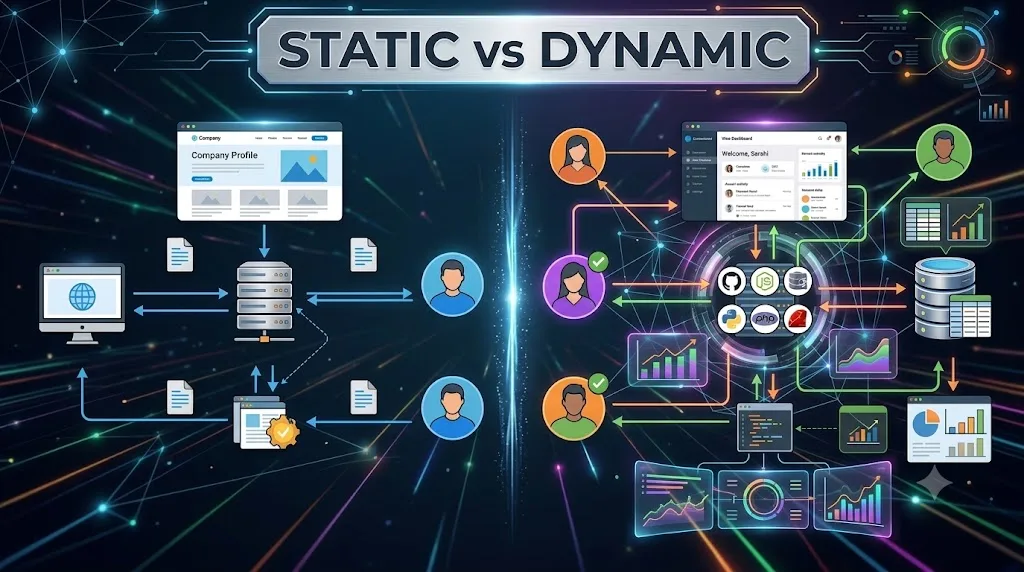
How Digital Transformation is Changing Manufacturing in India
India's manufacturing sector is at a turning point. For decades, Indian factories competed primarily on the strength of low labour costs and abundant raw materials. That advantage is narrowing.
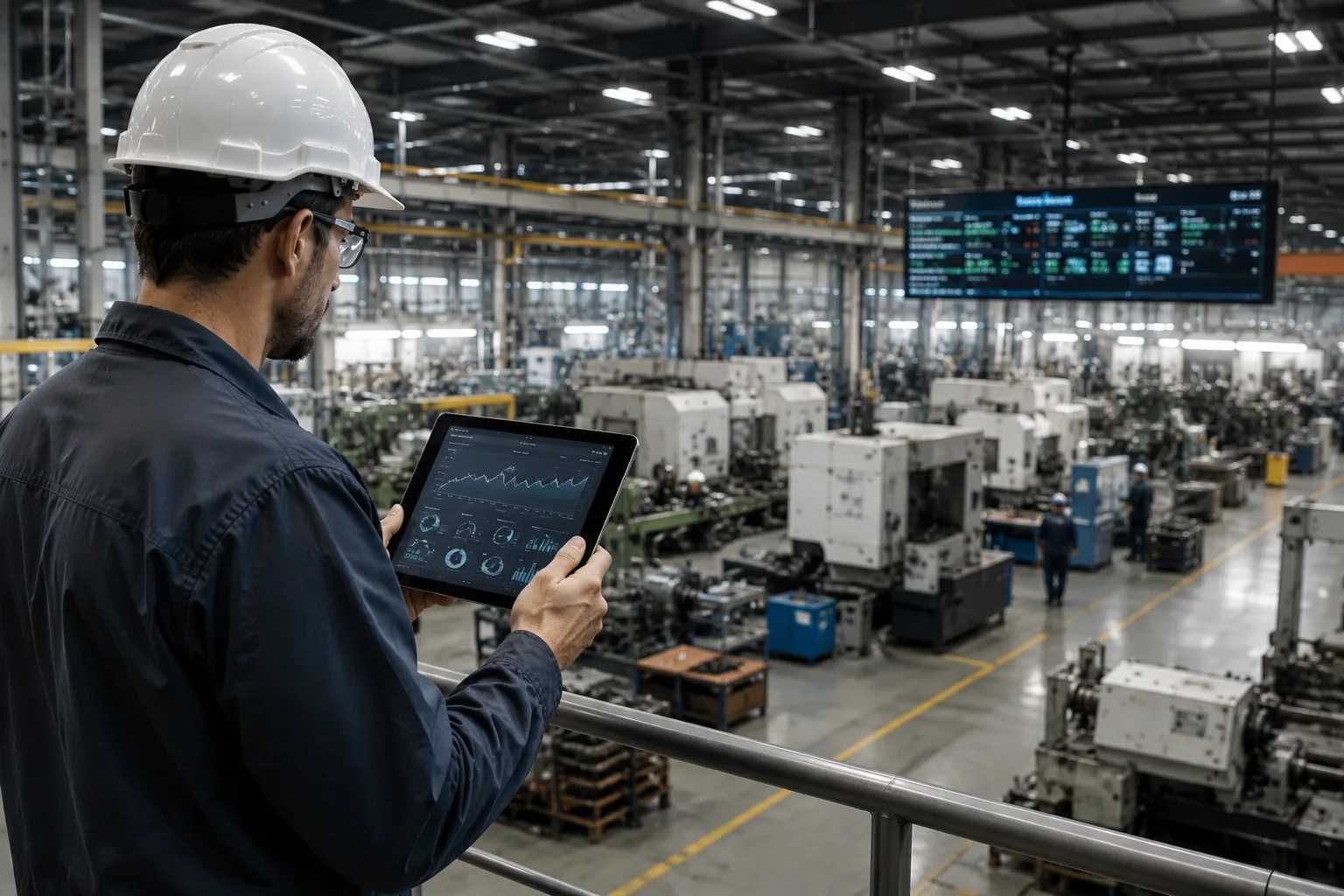
Global competition is intensifying. Supply chains are more complex. Customer expectations are rising. And the manufacturers that are pulling ahead in 2026 are not the ones with the most workers or the biggest facilities — they are the ones that have embraced digital transformation in manufacturing.
From small-scale fabrication units in Pune to large textile mills in Tiruppur, from auto component manufacturers in Chennai to pharmaceutical plants in Hyderabad — digital transformation is reshaping how Indian manufacturers plan, produce, manage, and deliver. This guide explains what that transformation actually looks like on the factory floor and in the back office, why it matters, and how the right software solutions make it practical for manufacturers of every size.
What Digital Transformation Actually Means for Manufacturing
Digital transformation is one of those phrases that gets used so broadly it can mean almost anything. For manufacturing specifically, it has a clear, practical meaning.
Digital transformation in manufacturing means replacing manual, paper-based, and disconnected processes with connected, data-driven digital systems that give manufacturers real-time visibility into their operations and the tools to act on what they see.
It is not about technology for technology's sake. It is about solving specific, measurable business problems:
Why are we producing more waste than we should?
Why does our inventory data never match what is actually on the shelf?
Why does it take three days to produce a report that should take three hours?
Why do we only find out about quality problems after they have affected a whole production run?
Why do our customers not know where their order is until it arrives?
Digital transformation answers these questions with systems that make the answers visible, automatable, and improvable.
The Manufacturing Challenges Driving Digital Adoption in India
The Make in India Opportunity — and the Pressure It Creates
The government's Make in India initiative has brought unprecedented focus to India's manufacturing capabilities — and with that focus comes pressure to meet global quality standards, delivery timelines, and operational efficiency benchmarks that were not always required when manufacturing for purely domestic markets.
Indian manufacturers winning international contracts now face customers who expect real-time order tracking, documented quality management, consistent delivery performance, and the kind of operational transparency that digital systems make possible. Meeting these expectations with manual, paper-based systems is increasingly impractical.
Rising Competition from Automation-Ready Manufacturers
Manufacturers in China, Vietnam, Bangladesh, and other competing markets have invested heavily in automation and digital operations. Indian manufacturers competing in the same global market need to close this gap — not necessarily by matching capital expenditure on physical automation, but by implementing the digital intelligence that makes existing operations significantly more efficient.
Supply Chain Complexity That Manual Systems Cannot Handle
Post-pandemic supply chain disruptions exposed a critical weakness in Indian manufacturing: overdependence on single suppliers, lack of real-time inventory visibility, and inability to quickly adapt procurement when disruptions occur. Digital systems that provide real-time supply chain visibility and enable rapid supplier pivoting have gone from nice-to-have to operationally essential.
GST and Regulatory Compliance Burden
India's GST framework, combined with other regulatory reporting requirements, has significantly increased the administrative burden on manufacturers. Businesses managing compliance manually — through spreadsheets and paper records — face mounting effort that digital systems can reduce dramatically through automated reporting, digital record-keeping, and integrated tax calculation.
Key Areas Where Digital Transformation Is Making the Biggest Difference
1. Production Planning and Scheduling
Traditional production planning in many Indian manufacturing units relies on experienced planners working from spreadsheets, phone calls, and institutional knowledge. This approach works until it doesn't — and when it breaks down, it breaks down expensively, in the form of idle machines, rushed orders, excess inventory, or missed delivery commitments.
Digital production planning systems provide real-time visibility into machine availability, material stocks, workforce capacity, and order priorities — allowing planners to optimise schedules with information that would take hours to compile manually, delivered instantly. When a machine breaks down or a material delivery is delayed, the system shows the downstream impact immediately and suggests adjustments rather than requiring a manual recalculation of the entire schedule.
2. Real-Time Inventory and Warehouse Management
Inventory discrepancies are endemic in manufacturing businesses that manage stock manually. The gap between what the system says is in the warehouse and what is actually there is a constant source of production delays, customer disappointment, and financial inefficiency.
Digital inventory management — with barcode scanning, RFID tracking, or even simple mobile-based stock counts that sync to a central database in real time — eliminates this gap. Management knows exactly what is in stock, where it is, and what it is allocated to at any moment. Automatic reorder alerts prevent stockouts. Detailed tracking of material consumption identifies waste.
3. Quality Management and Defect Tracking
Quality problems caught late are expensive. Quality problems caught at the customer end are catastrophic. Digital quality management systems enable quality checks to be recorded digitally at every production stage — with immediate visibility of any out-of-tolerance readings, automated alerts when defect rates exceed thresholds, and complete quality trail documentation for every batch.
For Indian manufacturers supplying to automotive OEMs, pharmaceutical companies, or export markets with strict quality documentation requirements, this digital quality trail is increasingly a commercial prerequisite — customers require it, not just prefer it.
4. Machine Monitoring and Predictive Maintenance
Unplanned machine downtime is one of the most costly disruptions in manufacturing. A machine that breaks down unexpectedly stops an entire production line, delays customer orders, and triggers expensive emergency repair services.
IoT sensors attached to critical machines — measuring vibration, temperature, power consumption, and other parameters — feed data to monitoring systems that detect early warning signs of impending failure before the breakdown occurs. Maintenance can be scheduled during planned downtime windows rather than happening as an emergency.
This shift from reactive to predictive maintenance consistently reduces downtime and extends equipment life — with measurable impact on production capacity and maintenance costs.
5. Customer Order Visibility and Communication
Manufacturers that give customers real-time visibility into their order status — current production stage, expected completion, shipping timeline — build stronger commercial relationships and receive significantly fewer status-update calls that consume sales and customer service team time.
A customer portal connected to production management systems delivers this visibility automatically, with customers seeing accurate status without requiring your team to compile and communicate updates manually.
6. Financial Visibility and Management Reporting
Many manufacturing businesses produce monthly financial reports that take a week to compile after month end — by which time the data is three to five weeks old. Decisions are made on outdated information, problems are identified late, and opportunities are missed.
Digital financial integration — connecting production, inventory, purchasing, and sales data into a unified financial view — makes accurate, up-to-date management information available daily rather than monthly. Gross margin by product line, cost per unit by shift, overhead allocation by production centre — the insights that support better business decisions are accessible in real time rather than after a prolonged manual compilation process.
The Role of Custom Software in Manufacturing Digital Transformation
Off-the-shelf ERP systems — SAP, Oracle, Tally, and others — serve many manufacturing businesses adequately, particularly those with relatively standard processes. But many Indian manufacturers have processes, workflows, and competitive differentiators that generic software does not accommodate well.
When Generic Software Falls Short
A manufacturer of custom-engineered components has a completely different production flow from a high-volume standard parts manufacturer. A textile dyeing facility has completely different quality parameters and batch management requirements from a garment assembly unit. A pharmaceutical manufacturer has regulatory documentation requirements that differ fundamentally from a food processing plant.
When generic software requires significant workarounds to accommodate your actual processes — or when your team maintains parallel spreadsheet systems to capture information the ERP cannot — that gap is costing you efficiency, accuracy, and the competitive advantage that your specific processes represent.
What Custom Manufacturing Software Delivers
Custom software developed by an experienced manufacturing software development company builds around your actual processes — your specific production workflows, your quality parameters, your customer communication requirements, and your reporting needs — rather than requiring your business to conform to generic process templates.
Process-Specific Workflows
Every form, every screen, every approval flow, and every alert is designed around how your factory actually runs — not how generic manufacturing software assumes it runs.
Integration with Existing Equipment and Systems
Custom software can be built to integrate directly with your existing machinery, your accounting system, your customer's ordering platform, or any other system your business currently uses — creating a connected digital infrastructure rather than another isolated tool.
Scalability as Your Business Grows
Custom systems grow with your business without hitting the licensing walls or architectural limits that constrain generic platforms when usage scales.
Competitive Process Protection
The unique processes that give your manufacturing business its competitive edge can be encoded into your software — giving you digital tools that competitors using generic platforms simply cannot replicate.
The Make in India Digital Journey: Where to Start
The scale of digital transformation can feel overwhelming, particularly for manufacturers who are starting from largely manual operations. The practical approach is not to transform everything at once but to identify the highest-impact starting points and build from there.
Start with Your Biggest Pain Point
What is the single operational problem that costs your business the most — in time, money, quality, or customer satisfaction? That is where digital transformation investment delivers the fastest, most visible return.
For many manufacturers it is inventory accuracy. For others it is production scheduling visibility. For some it is quality documentation for compliance. Starting with the area of highest pain ensures early investment delivers results that build confidence and support for broader transformation.
Build a Roadmap, Not Just a Project
Digital transformation is not a project with a completion date. It is a continuous journey of incremental improvement. A roadmap that identifies today's priority, next year's next priority, and a longer-term vision for connected digital operations gives transformation structure and direction without requiring everything to happen at once.
Choose Partners Who Understand Manufacturing
Generic software developers can build functional systems. Developers who understand manufacturing — who have worked with production planning, quality management, inventory control, and the operational realities of factory environments — build systems that work the way manufacturing actually works.
When evaluating a manufacturing web app and software development partner, look specifically for evidence of manufacturing-domain experience — not just general software development capability.
Frequently Asked Questions
1. What is digital transformation in manufacturing and why does it matter for Indian factories?
Digital transformation in manufacturing means replacing manual, paper-based, and disconnected operational processes with integrated digital systems that provide real-time visibility and control across production, inventory, quality, and business management. For Indian factories, it matters because global competition, rising customer expectations, and the Make in India opportunity all demand the operational efficiency and transparency that digital systems deliver — while manual approaches increasingly cannot keep pace with these requirements.
2. Do small and medium-sized Indian manufacturers need digital transformation or is it only for large factories?
Digital transformation is not exclusively for large manufacturers — in fact, small and medium manufacturing businesses often see proportionally greater returns because they start from less efficient manual processes. The scale of investment should match the scale of the business, and phased approaches that start with the most impactful improvements and build over time make digital transformation practical for manufacturers of every size, not just large enterprises.
3. How long does it take to implement manufacturing software and see results?
Implementation timelines depend on the scope of the system. A focused solution addressing a specific operational area — inventory management, quality tracking, or production scheduling — can typically be implemented and producing measurable results within two to four months. Broader digital transformation initiatives covering multiple operational areas are structured in phases, with each phase delivering value before the next begins, rather than requiring a long implementation before any benefits are realised.
4. What is the difference between off-the-shelf ERP software and custom manufacturing software?
Off-the-shelf ERP systems are designed to serve many different manufacturing businesses with standard, configurable features. They work well when a manufacturer's processes are broadly similar to the templates the software was built around. Custom manufacturing software is built around your specific processes, workflows, quality requirements, and reporting needs — making it the better choice when your business has genuinely unique processes, when generic systems require significant workarounds, or when your operational differentiation is something you want to protect and encode into your digital tools rather than replace with a standard template.
5. How do I choose the right manufacturing software development company in India?
Look for development partners with demonstrated experience in manufacturing-specific software — not just general business software. Ask to see examples of manufacturing systems they have built and speak with clients in manufacturing industries about their experience. Evaluate how thoroughly the development team asks about your actual operational processes before proposing solutions — developers who jump to technical proposals without deeply understanding your operational context rarely build systems that work well in practice. Also evaluate their post-launch support capability, since manufacturing software requires ongoing maintenance, updates, and occasional process adaptations as your operations evolve.
Conclusion
Digital transformation in manufacturing India is not a future trend — it is a present reality that is separating the manufacturers growing their competitiveness from those falling behind. From production planning and inventory management to quality control, machine monitoring, customer visibility, and financial reporting, digital systems are making Indian manufacturing businesses more efficient, more transparent, and more capable of competing in both domestic and global markets.
The practical path forward is not attempting to transform everything at once but starting with the highest-impact opportunities, building digital capability incrementally, and choosing development partners who understand the specific operational realities of manufacturing environments.
For Indian manufacturers ready to build the digital infrastructure that supports genuine operational improvement and growth, explore our manufacturing software development services to see how we help manufacturing businesses build the specific digital tools their operations actually need.